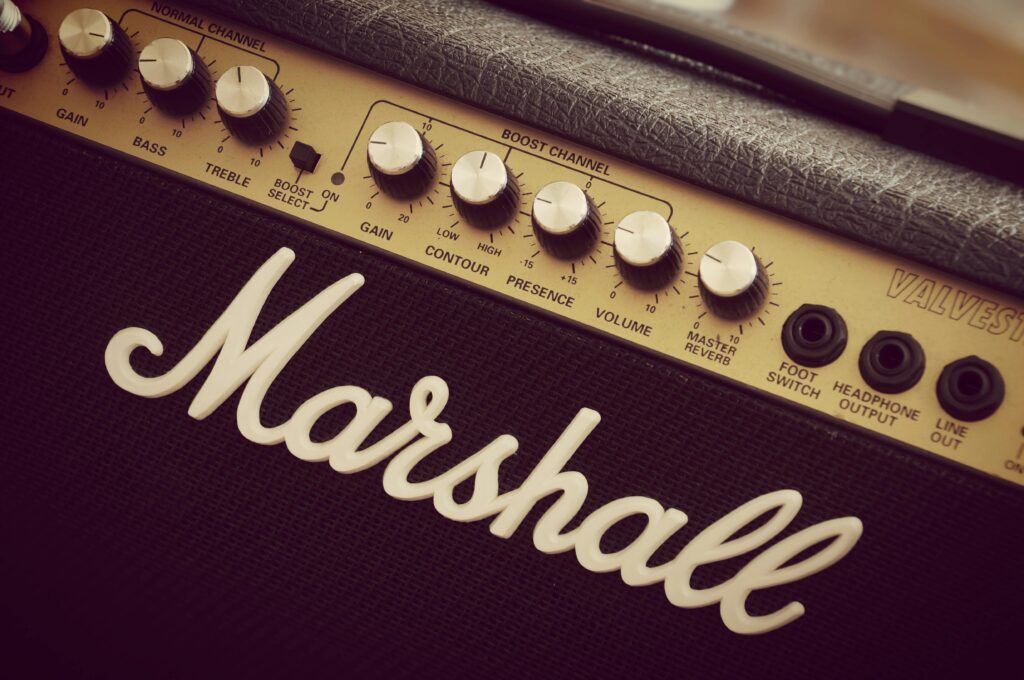
Choosing the right amplifier (commonly referred to as “amp”) can greatly impact your audio experience, whether you’re a musician, a home theater enthusiast, a home-based music studio recording, or someone who values pristine music sound quality. Amplifiers are the backbone of many audio setups, providing the necessary power to drive speakers and enhance audio output. This guide breaks down key considerations to help you find the perfect amp for your needs.
Understanding the Basics of Amplifiers
What Is an Amplifier?
An amplifier is an electronic device that increases the power of audio signals. It takes a weak input signal and amplifies it to produce a stronger output, capable of driving speakers or other output devices.
Why Do You Need an Amp?
The main reason to use an amplifier is to improve audio quality by providing sufficient power and clarity. Whether you’re setting up a home theater, an electric guitar rig, or a simple hi-fi system, an amplifier plays a crucial role in delivering sound without distortion.
Types of Amplifiers
Integrated Amps
Integrated amplifiers combine a preamp (which processes the audio signal) and a power amp (which provides the muscle to drive speakers) into one unit. This is perfect for those seeking simplicity in their audio setup.
Power Amps
Power amps are dedicated solely to driving speakers, requiring an external preamp for volume and tone control. They’re ideal for custom setups where users prefer flexibility.
Pre-Amplifiers (Preamps)
These handle input switching and volume control but need a power amp to drive speakers. Preamps are suitable for users who want precise control over audio processing.
Receiver Amps
Receivers integrate an amplifier with a radio tuner and often come with various input options and surround sound processing capabilities, making them great for home theaters.
Key Factors to Consider When Choosing an Amp
Power Output (Wattage)
Choosing the correct wattage depends on the type of speakers and the room size. Higher wattage allows for higher volume levels without distortion:
- For home use: A 50-100 watt amp is sufficient. This wattage is perfect for small practice rooms in music schools like Berklee School of Music in Boston, MA.
- For large venues: Look for 200+ watt amplifiers.
- Musical instruments: Guitar amplifiers often range from 15 to 100 watts, depending on the setting (e.g., practice vs. performance).
Impedance Matching
Ensure the amp’s impedance matches that of your speakers (commonly 4, 6, or 8 ohms). Proper matching prevents damage to the amp and optimizes sound quality.
Total Harmonic Distortion (THD)
Lower THD (typically below 0.1%) indicates clearer sound with less noise and distortion, a key aspect for high-fidelity systems.
Connectivity and Inputs
Consider the types of connections you need, such as:
- Analog inputs (RCA or XLR for professional use)
- Digital inputs (USB, HDMI, optical)
- Wireless connectivity (Bluetooth or Wi-Fi for modern setups)
Solid-State vs. Tube Amplifiers
Solid-State Amplifiers
These use transistors and are known for their reliability, efficiency, and lighter weight. They’re great for a consistent, clean sound and are often more budget-friendly.
Tube Amplifiers
Tube amps are preferred by audiophiles and musicians for their warm, rich sound. However, they require more maintenance and are generally heavier and pricier.
Pros and Cons Table
| Type | Pros | Cons |
| Solid-State | Durable, affordable, lightweight | Lacks the warmth of tube amps |
| Tube | Warm sound, natural distortion | Expensive, heavier, needs upkeep |
Musicians like those inspired by David Bowie’s music often gravitate toward amps that can deliver warmth, character, and dynamic response.
Matching Your Amp to Your Speaker System
Speaker Sensitivity
A speaker’s sensitivity rating (measured in dB) indicates how much sound a speaker produces with 1 watt of power at 1 meter. The higher the sensitivity, the less power is needed for a loud sound.
- Below 85 dB: Requires more power (high-wattage amp).
- 85-92 dB: Works well with medium-power amps.
- Above 92 dB: Efficient speakers that pair with low to medium power amps.
Room Size and Acoustics
The size of the room impacts how much power you need:
- Small rooms: Less than 100 watts may suffice.
- Medium rooms: 100-200 watts.
- Large/open spaces: Over 200 watts for full coverage.
Acoustic properties (e.g., carpet vs. tile flooring, wall coverings) can affect sound clarity and volume needs.
Advanced Features to Look For
Equalization (EQ) Controls
Built-in EQ helps shape the sound profile to better match your preference, whether you enjoy more bass or crisper treble.
Built-in DAC (Digital-to-Analog Converter)
A DAC can improve sound quality when playing digital sources by converting digital audio signals into analog ones.
Multi-Zone Capabilities
For users with multi-room setups, an amplifier with multi-zone control allows different audio sources to play in different areas simultaneously.
Budget Considerations
Entry-Level Options
For those on a budget, consider solid-state amps that offer great performance at affordable prices. Brands like Yamaha, Denon, and Marantz are known for producing reliable entry-level models.
Mid-Range Options
Integrated amps or receiver amps with more power and additional features, such as Wi-Fi connectivity and built-in DACs, are ideal for mid-range budgets.
High-End Choices
Audiophiles may look at tube amps or high-powered solid-state models from brands like McIntosh or NAD for top-notch sound and durability.
FAQs About Choosing the Right Amp
How do I know if my amp is powerful enough for my speakers?
Check your speakers’ sensitivity and match it with an amplifier that provides adequate wattage to reach the desired sound levels.
Are tube amps worth the investment?
If you prioritize warm, vintage sound and don’t mind maintenance, tube amps can be an excellent choice.
What is the difference between an integrated amp and a receiver?
An integrated amp combines a preamp and power amp, while a receiver also includes a radio tuner and often more connectivity options.
Do I need an amp if my speakers are active?
Active speakers have built-in amplifiers, so an external amp is unnecessary. However, you may still need a preamp for input management.
How important is total harmonic distortion (THD)?
Very. Lower THD means cleaner sound with minimal distortion, which is crucial for audiophiles.
Can I connect my amp wirelessly?
Many modern amplifiers come with Bluetooth or Wi-Fi capabilities for seamless streaming from your devices.
Should I cover my amplifier when it is not being used?
A protective audio equipment cover can be useful if an amplifier will remain unused for an extended period. This is especially helpful in rooms where dust, pet hair, or other airborne particles accumulate quickly. Always make sure the amplifier is cool before covering it and allow sufficient ventilation during operation.